ALMASIR, an ISO 9001-2008 & 22000-2005 certified company has introduced first time in India an excellent product Lycopene Capsules. It is a HALAL & Kosher certified Dietary Supplement, marketed in India by Almasir Healthcare in collaboration with Hawaiian Herbals, USA. It is 100% natural product produced under international GMP regulations. Lycopene is considered to be biologically important carotenoid for humans that are found in red fruits and tomatoes. Lycopene Capsules contains lycopene made from organic tomatoes, as found in high amounts in tomatoes and tomato products and we are producing Microencapsulated beadles of LYCOPENE 100% 5mg D Salina extract 2.5mg Vitamin A 2500 I U vitamin C 50 mg Vitamin E 10 mg Zinc methionine 15mg Lselenomethionine 50mcg.
Health Benefits of Almasir lycopene
Lycopene is a powerful antioxidant that may help protect cells from oxidative damage
It is used for preventing heart disease like atherosclerosis
It is helpful in preventing chronic diseases in the body like joint pains, skin diseases and diabetes
It is helpful in infertility also
It is used in preventing cancer of the prostate, breast, lung, bladder, ovaries, colon, and pancreas
Lycopene is also used for treating human papilloma virus (HPV) infection, which is a major cause of uterine cancer
It is used in age related macular degeneration, cataracts and for glaucoma
It is used in asthma also
Directions for use
Take one capsule twice daily on an empty stomach or at least half an hour before morning and evening meal. For better result, continue to use for 6-12 months.
Lycopene offers several health benefits for men, particularly regarding
prostate health, cardiovascular health, and male fertility, primarily due to its potent antioxidant properties.
Prostate Health
Lycopene is heavily concentrated in prostate tissue and research suggests it may help in:
• Reducing risk of prostate cancer: Epidemiological studies associate high lycopene intake with a lower risk of developing prostate cancer. Laboratory and animal studies show that lycopene can inhibit the proliferation and growth of prostate cancer cells by modulating various signaling pathways and inducing cell death (apoptosis).
• Managing Benign Prostatic Hyperplasia (BPH): A clinical study indicated that men with BPH who took lycopene supplements experienced a decrease in prostate-specific antigen (PSA) levels and did not experience prostate enlargement, unlike the placebo group. This suggests lycopene may inhibit the progression of BPH symptoms.
Cardiovascular Health
Lycopene contributes to heart health by mitigating oxidative stress and inflammation, which are key factors in cardiovascular disease development. Specific benefits include:
• Lowering cholesterol: Lycopene may reduce levels of "bad" (LDL) cholesterol while potentially increasing "good" (HDL) cholesterol, which helps prevent the buildup of fatty deposits in arteries.
• Improving arterial function and blood pressure: It can improve the function of blood vessels and help maintain healthy blood pressure levels, reducing the risk of heart attack and stroke.
• Reducing erectile dysfunction (ED) risk: Conditions that affect blood vessels, like high blood pressure and atherosclerosis, are risk factors for ED. By improving cardiovascular health, lycopene may also help reduce the risk of ED.
Male Fertility
Lycopene is the most abundant carotenoid found in the testes and seminal fluid, where it helps protect sperm from oxidative damage. Benefits for fertility include:
• Improved sperm quality: Studies have shown that lycopene supplementation can enhance various sperm parameters, including concentration, motility (ability to move), and morphology (shape).
• Protecting sperm DNA: Lycopene's antioxidant action helps prevent DNA damage and lipid peroxidation in sperm cells, which is a major factor in male infertility and can affect fertilization outcomes.
• Enhanced hormone levels: Some animal studies suggest lycopene can help maintain normal levels of reproductive hormones like testosterone, which are essential for sperm production.
ALMASIR LYCOPENE:
Benefits for women's health
Lycopene benefits women's health by supporting heart health, reducing the risk of certain cancers like breast cancer, and improving bone density, particularly for postmenopausal women. It also has antioxidant and anti-inflammatory effects that can help with skin health, protect against UV damage, and may alleviate menopause symptoms.
Cardiovascular health
• Reduces heart disease risk:
Studies link higher lycopene intake to a lower risk of heart disease in women.
• Improves cholesterol levels:
Lycopene may help lower "bad" LDL cholesterol and raise "good" HDL cholesterol.
• Fights inflammation:
Its antioxidant properties reduce oxidative stress, which is a key factor in heart disease development.
Cancer prevention
• Lower breast cancer risk:
Research suggests that high lycopene intake is associated with a significantly lower risk of developing invasive breast cancer, especially in postmenopausal women.
• Inhibits tumor growth:
Test-tube studies show lycopene may slow the growth of breast cancer cells.
Bone health
• Strengthens bones: Lycopene can help maintain bone density and strength, which is crucial for preventing fractures and osteoporosis, particularly in postmenopausal women.
Skin health
• Provides sun protection: Lycopene can help protect the skin from UV radiation damage.
• Anti-aging effects: It can protect collagen and elastin from free radicals, which slows the aging process and reduces wrinkles and age spots.
• Improves skin hydration: Lycopene contributes to skin hydration.
Other benefits
• May help with menopause symptoms: Lycopene supplementation may help with some menopause-related symptoms and reduce oxidative stress.
• Supports eye health: Lycopene can support overall eye health.
Based on current research, there is no evidence to suggest that lycopene is a primary treatment for leucorrhoea. Leucorrhoea is a general term for vaginal discharge, which can be normal (physiological) or caused by infections, hormonal imbalances, and other underlying conditions (pathological). Treatments are targeted to the specific cause.
Lycopene is a potent antioxidant, and research primarily focuses on its benefits for conditions related to oxidative stress and inflammation. There is no direct clinical trial data connecting lycopene as a cure or beneficial treatment for leucorrhoea.
Common causes of leucorrhoea
• Physiological changes: Normal hormonal fluctuations can increase discharge.
• Infections: This is a common cause of pathological leucorrhoea. Infections can be bacterial, fungal (like Candida albicans), or parasitic (Trichomonas).
• Hormonal imbalances.
• Inflammatory conditions.
Lycopene's general health benefits
Although not a remedy for leucorrhoea, lycopene's documented benefits for overall health include:
• Antioxidant properties: It helps neutralize harmful free radicals that cause oxidative damage in the body.
• Anti-inflammatory properties: Lycopene may reduce systemic inflammation.
• Potential anti-cancer effects: Research has explored its role in inhibiting cancer cell growth.
• Protective effects against oral diseases: Studies show it can be effective against conditions like oral leukoplakia.
Important considerations
• Consult a doctor: If you have abnormal vaginal discharge (itching, odor, or a change in color), you should consult a doctor or gynecologist. A proper diagnosis is necessary for effective treatment.
• Lycopene is not a substitute for medical treatment: Relying solely on lycopene for a condition like pathological leucorrhoea could delay appropriate and necessary medical intervention.
• Supporting evidence is lacking: The claim that lycopene benefits leucorrhoea is not supported by credible scientific studies, and research in this area is scarce.

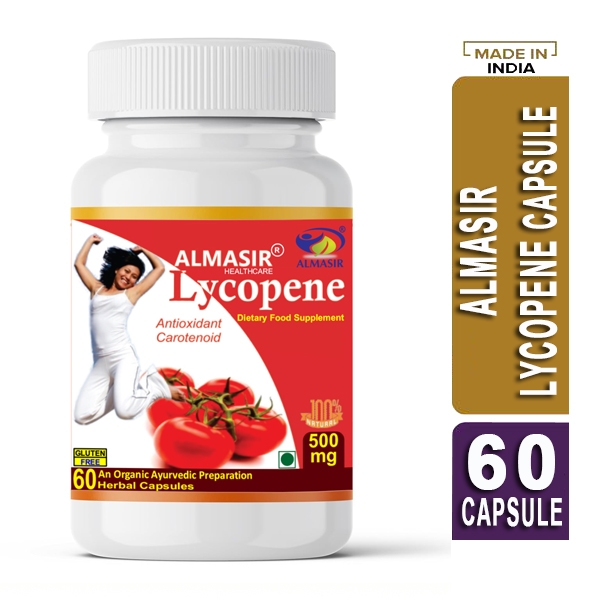


Health Benefits of Almasir lycopene
Directions for use
Take one capsule twice daily on an empty stomach or at least half an hour before morning and evening meal. For better result, continue to use for 6-12 months.
Serving size:
1 capsule, Serving per container: 60 capsules M.R.P.: Rs.770/per container ,Health benefits of lycopene for men
Lycopene offers several health benefits for men, particularly regarding
prostate health, cardiovascular health, and male fertility, primarily due to its potent antioxidant properties.
Prostate Health
Lycopene is heavily concentrated in prostate tissue and research suggests it may help in:
• Reducing risk of prostate cancer: Epidemiological studies associate high lycopene intake with a lower risk of developing prostate cancer. Laboratory and animal studies show that lycopene can inhibit the proliferation and growth of prostate cancer cells by modulating various signaling pathways and inducing cell death (apoptosis).
• Managing Benign Prostatic Hyperplasia (BPH): A clinical study indicated that men with BPH who took lycopene supplements experienced a decrease in prostate-specific antigen (PSA) levels and did not experience prostate enlargement, unlike the placebo group. This suggests lycopene may inhibit the progression of BPH symptoms.
Cardiovascular Health
Lycopene contributes to heart health by mitigating oxidative stress and inflammation, which are key factors in cardiovascular disease development. Specific benefits include:
• Lowering cholesterol: Lycopene may reduce levels of "bad" (LDL) cholesterol while potentially increasing "good" (HDL) cholesterol, which helps prevent the buildup of fatty deposits in arteries.
• Improving arterial function and blood pressure: It can improve the function of blood vessels and help maintain healthy blood pressure levels, reducing the risk of heart attack and stroke.
• Reducing erectile dysfunction (ED) risk: Conditions that affect blood vessels, like high blood pressure and atherosclerosis, are risk factors for ED. By improving cardiovascular health, lycopene may also help reduce the risk of ED.
Male Fertility
Lycopene is the most abundant carotenoid found in the testes and seminal fluid, where it helps protect sperm from oxidative damage. Benefits for fertility include:
• Improved sperm quality: Studies have shown that lycopene supplementation can enhance various sperm parameters, including concentration, motility (ability to move), and morphology (shape).
• Protecting sperm DNA: Lycopene's antioxidant action helps prevent DNA damage and lipid peroxidation in sperm cells, which is a major factor in male infertility and can affect fertilization outcomes.
• Enhanced hormone levels: Some animal studies suggest lycopene can help maintain normal levels of reproductive hormones like testosterone, which are essential for sperm production.
ALMASIR LYCOPENE:
Benefits for women's health
Lycopene benefits women's health by supporting heart health, reducing the risk of certain cancers like breast cancer, and improving bone density, particularly for postmenopausal women. It also has antioxidant and anti-inflammatory effects that can help with skin health, protect against UV damage, and may alleviate menopause symptoms.
Cardiovascular health
• Reduces heart disease risk:
Studies link higher lycopene intake to a lower risk of heart disease in women.
• Improves cholesterol levels:
Lycopene may help lower "bad" LDL cholesterol and raise "good" HDL cholesterol.
• Fights inflammation:
Its antioxidant properties reduce oxidative stress, which is a key factor in heart disease development.
Cancer prevention
• Lower breast cancer risk:
Research suggests that high lycopene intake is associated with a significantly lower risk of developing invasive breast cancer, especially in postmenopausal women.
• Inhibits tumor growth:
Test-tube studies show lycopene may slow the growth of breast cancer cells.
Bone health
• Strengthens bones: Lycopene can help maintain bone density and strength, which is crucial for preventing fractures and osteoporosis, particularly in postmenopausal women.
Skin health
• Provides sun protection: Lycopene can help protect the skin from UV radiation damage.
• Anti-aging effects: It can protect collagen and elastin from free radicals, which slows the aging process and reduces wrinkles and age spots.
• Improves skin hydration: Lycopene contributes to skin hydration.
Other benefits
• May help with menopause symptoms: Lycopene supplementation may help with some menopause-related symptoms and reduce oxidative stress.
• Supports eye health: Lycopene can support overall eye health.
Based on current research, there is no evidence to suggest that lycopene is a primary treatment for leucorrhoea. Leucorrhoea is a general term for vaginal discharge, which can be normal (physiological) or caused by infections, hormonal imbalances, and other underlying conditions (pathological). Treatments are targeted to the specific cause.
Lycopene is a potent antioxidant, and research primarily focuses on its benefits for conditions related to oxidative stress and inflammation. There is no direct clinical trial data connecting lycopene as a cure or beneficial treatment for leucorrhoea.
Common causes of leucorrhoea
• Physiological changes: Normal hormonal fluctuations can increase discharge.
• Infections: This is a common cause of pathological leucorrhoea. Infections can be bacterial, fungal (like Candida albicans), or parasitic (Trichomonas).
• Hormonal imbalances.
• Inflammatory conditions.
Lycopene's general health benefits
Although not a remedy for leucorrhoea, lycopene's documented benefits for overall health include:
• Antioxidant properties: It helps neutralize harmful free radicals that cause oxidative damage in the body.
• Anti-inflammatory properties: Lycopene may reduce systemic inflammation.
• Potential anti-cancer effects: Research has explored its role in inhibiting cancer cell growth.
• Protective effects against oral diseases: Studies show it can be effective against conditions like oral leukoplakia.
Important considerations
• Consult a doctor: If you have abnormal vaginal discharge (itching, odor, or a change in color), you should consult a doctor or gynecologist. A proper diagnosis is necessary for effective treatment.
• Lycopene is not a substitute for medical treatment: Relying solely on lycopene for a condition like pathological leucorrhoea could delay appropriate and necessary medical intervention.
• Supporting evidence is lacking: The claim that lycopene benefits leucorrhoea is not supported by credible scientific studies, and research in this area is scarce.